
That sharp knee pain after a sudden twist or pivot could be a meniscus tear. Meniscus tear symptoms range from a popping sensation and joint-line pain to swelling, stiffness, and a knee that locks or gives way. Without proper diagnosis and treatment, a torn meniscus can lead to long-term joint damage, including osteoarthritis.
- Symptoms vary by severity: Meniscus tear symptoms depend on the size and location of the tear, from mild stiffness to a locked knee that cannot fully bend or straighten.
- Walking does not rule it out: Many people walk after a meniscus tear, only to experience worsening pain and swelling over several days.
- Treatment ranges from rest to surgery: Depending on the type and severity of the tear, treatment can involve the RICE method, physical therapy, or arthroscopic surgery.
Meniscus tear symptoms affect people of all ages and activity levels — from competitive athletes to older adults whose cartilage has worn down over time. According to a 2022 study published in the National Library of Medicine, meniscal tears affect about 1 in 8 people. That makes this one of the most frequently diagnosed knee injuries in orthopedic practice.
Whether your pain came on suddenly after a sports injury or crept up gradually without a clear cause, understanding what a meniscus tear feels like and when to seek care can make a meaningful difference in your recovery.
What Is the Meniscus and Why Does It Matter?
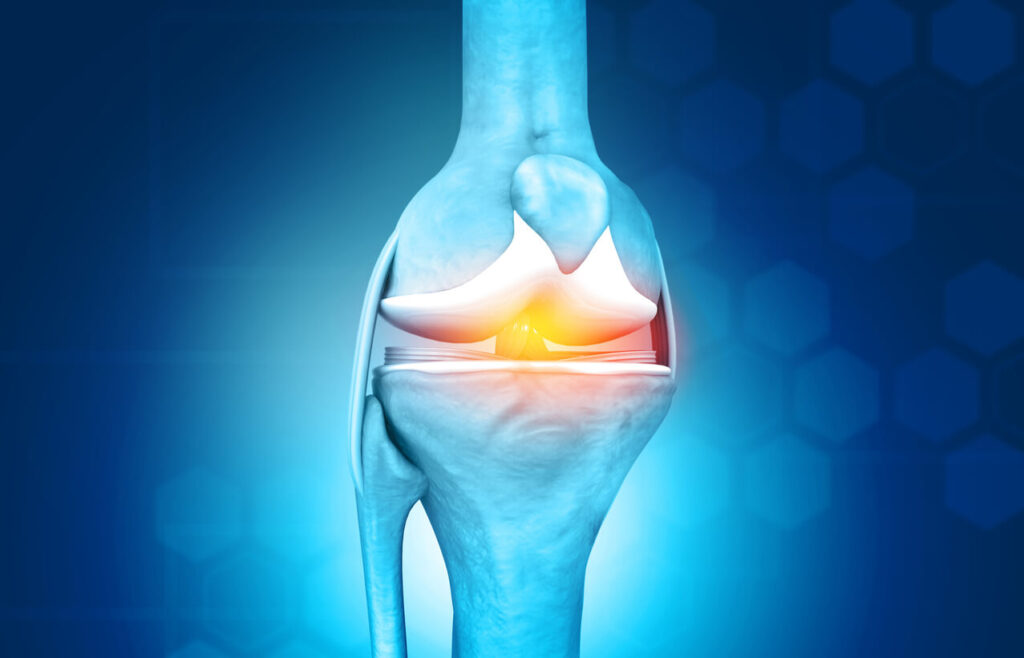
Inside each knee joint, two C-shaped pieces of tough cartilage called the menisci sit between the thighbone (femur) and shinbone (tibia). These wedge-shaped structures act as shock absorbers, distributing weight evenly across the knee joint and protecting the bones from direct impact.
There are two types of menisci in each knee:
- Medial meniscus: Located on the inner side of the knee
- Lateral meniscus: Located on the outer side of the knee
When either of these structures tears, it can disrupt normal knee mechanics and cause significant pain, instability, and swelling. Left untreated, a meniscus tear can accelerate the breakdown of cartilage in the joint and increase the risk of developing osteoarthritis over time, according to the Cleveland Clinic.
What Are the Warning Signs of a Meniscus Tear?
Recognizing meniscus tear symptoms early is one of the most important steps toward getting the right care. The challenge is that some symptoms appear immediately after an injury, while others develop gradually over 24 to 48 hours. The Mayo Clinic identifies the following as the most common meniscus tear symptoms:
- A popping sensation: Many people report hearing or feeling a distinct pop inside the knee at the moment of injury
- Swelling and stiffness: The knee may appear visibly swollen or feel tight and difficult to move
- Pain along the joint line: Tenderness along the inner or outer edge of the knee is a hallmark warning sign
- Inability to fully straighten the knee: A torn meniscus can physically block the knee from extending all the way
- Knee locking: The knee may feel “stuck” or locked in a bent position and refuse to move freely
- A feeling of giving way: The knee may feel unstable or buckle unexpectedly under weight
Not every meniscus tear presents the same way. A small tear may cause only mild discomfort and intermittent stiffness, while a larger or more complex tear can severely limit movement and function.
Can You Walk with a Torn Meniscus?
This is one of the most common questions people ask after a knee injury — and the answer is yes, at least initially. Many people are able to bear weight on the injured leg right after the injury occurs. However, the knee typically becomes increasingly painful and swollen over the following two to three days, making walking more difficult and uncomfortable.
Being able to walk does not mean the injury is minor. Continuing to put stress on a torn meniscus without proper evaluation can worsen the damage and delay healing.
What Causes a Meniscus Tear?
Meniscus tears fall into two broad categories: acute tears and degenerative tears.
Acute Meniscus Tears
Acute tears happen suddenly, usually during physical activity. Any movement that causes the knee to twist or rotate forcefully while the foot remains planted on the ground can tear the meniscus. Common causes include:
- Pivoting or cutting quickly during sports
- Sudden stops and sharp changes in direction
- Deep squatting or kneeling under load
- Direct impact or a tackle to the knee
Degenerative Meniscus Tears
Degenerative tears occur gradually as the cartilage weakens with age or due to arthritis. Older adults can tear a meniscus from something as minor as stepping off a curb awkwardly.
In these cases, there may not be a single identifiable injury event — the pain and swelling simply develop over time.
Who Is at Higher Risk for Meniscus Tear Symptoms?
Certain groups of people are more likely to experience meniscus tear symptoms than others. Risk factors identified by the Mayo Clinic include:
- Athletes: Sports that involve pivoting, jumping, or contact such as football, basketball, soccer, and tennis place significant stress on the knee joint
- Older adults: Cartilage naturally weakens and thins with age, making the meniscus more susceptible to tearing even with low-impact movements
- People with obesity: Excess body weight increases the load placed on the knee joint with every step
- Those with arthritis: Pre-existing joint degeneration makes the meniscus more fragile and prone to tearing
How Is a Meniscus Tear Diagnosed?
A proper diagnosis requires more than identifying symptoms on your own. An orthopedic specialist will begin with a thorough physical examination of the knee, assessing swelling, tenderness, and range of motion. Two commonly used clinical tests, the McMurray test and the Thessaly test, help identify signs consistent with a meniscus tear.
Imaging studies are typically ordered to confirm the diagnosis and assess the extent of the injury:
- X-ray: Cartilage does not show up on X-rays, but this imaging can rule out fractures or other bone-related conditions that may cause similar symptoms
- Magnetic resonance imaging (MRI): MRI is the most effective imaging tool for visualizing soft tissue, including the meniscus. It allows the physician to see the size, type, and exact location of the tear
- Arthroscopy: In some cases, a surgeon inserts a small camera into the knee through a tiny incision to directly visualize the tear and, if needed, address it during the same procedure
What Are the Treatment Options for a Torn Meniscus?
Treatment depends on the severity of the tear, its location within the meniscus, and the patient’s age, activity level, and overall health. Many meniscus tears can be managed without surgery, particularly smaller tears located along the outer edge of the meniscus where blood supply is better.
Conservative (Non-Surgical) Treatment
Health experts recommend starting with the RICE method immediately after the injury:
- Rest: Minimize weight-bearing on the injured knee
- Ice: Apply an ice pack for 15 to 20 minutes, several times a day
- Compression: Use a compression bandage to reduce swelling
- Elevation: Keep the leg raised above heart level to decrease fluid buildup
Over-the-counter nonsteroidal anti-inflammatory drugs (NSAIDs) such as ibuprofen (Advil, Motrin) or aspirin (Bayer, Ecotrin) can help control pain and reduce inflammation. Physical therapy is also a key component of recovery, helping to strengthen the muscles that support the knee and restore range of motion.
A 2024 consensus statement published in the National Library of Medicine confirmed that exercise-based physical therapy is the most thoroughly studied and supported intervention for the non-surgical management of meniscus tears, particularly for patients with degenerative tears.
Surgical Treatment
When conservative treatment does not relieve symptoms, or when the knee continues to lock or give way, surgery may be necessary. Orthopedic surgeons typically use arthroscopic techniques, which involve small incisions and a tiny camera, to either repair or trim the torn portion of the meniscus.
Surgery is particularly effective for younger patients with repairable tears, and recovery with physical therapy can restore the knee to full function.
Recovery timelines vary. Patients who undergo meniscus repair in which the tear is sutured and allowed to heal typically require 3 to 6 months before returning to sports. Partial meniscectomy, where only the damaged portion is removed, generally allows for a faster return to activity.
How Can You Prevent a Meniscus Tear?
While accidents cannot always be avoided, there are practical steps that reduce your risk.
- Strengthening the muscles around the knee, particularly the quadriceps and hamstrings, to provide better joint support
- Wearing a knee brace if your knee is known to be unstable or weak
- Increasing exercise intensity gradually rather than making sudden jumps in activity level
- Wearing sport-specific footwear that provides proper support and traction
Maintaining a healthy body weight also plays a significant role, as excess weight places greater stress on the knee cartilage with every step.
Frequently Asked Questions (FAQ)
Below, you’ll find common questions about meniscus tears.
What are the first signs of a meniscus tear?
The earliest meniscus tear symptoms often include a popping sensation in the knee at the time of injury, followed by pain along the joint line, and swelling that develops over 24 to 48 hours. Some people also notice stiffness or difficulty fully bending and straightening the knee.
How do I know if my knee pain is a meniscus tear or something else?
Meniscus tear symptoms such as joint-line tenderness, a locked or giving-way knee, and swelling after a twisting injury differ from symptoms caused by ligament injuries or bursitis. However, an accurate diagnosis requires a physical examination and, in most cases, an MRI.
A physician can differentiate between a meniscus tear and other conditions causing similar knee pain.
Can a meniscus tear heal on its own without surgery?
Small meniscus tears located near the outer edge of the cartilage where blood supply is adequate can heal with conservative care, including rest, ice, compression, elevation, and physical therapy. Larger tears or tears in areas with poor blood supply are less likely to heal without surgical intervention.
How long does it take to recover from a meniscus tear?
Recovery time depends on the size and location of the tear and whether surgery is required. Conservative treatment typically takes several weeks to a few months. Surgical repair may require 3 to 6 months of recovery, while partial meniscectomy often allows a return to activity within 4 to 6 weeks.
Is it safe to keep exercising with meniscus tear symptoms?
Continuing high-impact or pivoting activities while experiencing meniscus tear symptoms can worsen the tear and delay healing. It is advisable to stop activities that aggravate the knee and consult an orthopedic specialist before resuming exercise.
Who should I see for meniscus tear symptoms?
An orthopedic specialist, particularly one with experience in sports medicine or knee conditions, is best positioned to evaluate and treat meniscus tear symptoms. Early intervention often results in better outcomes and a faster return to normal activity.
Experiencing Meniscus Tear Symptoms in New Jersey? Seek Expert Orthopedic Care
If you are experiencing meniscus tear symptoms, whether from a sports injury, a sudden fall, or gradual wear and tear, prompt evaluation by an orthopedic specialist is essential. Delaying care can allow a manageable tear to worsen and increase the risk of long-term joint complications.
At Orthopedic Associates of West Jersey, our team of five experienced orthopedic specialists provides comprehensive knee care, including evaluation and treatment of meniscus injuries.
To schedule an appointment, call (973) 989-0888 or use our appointment form to learn more about the services available.
