
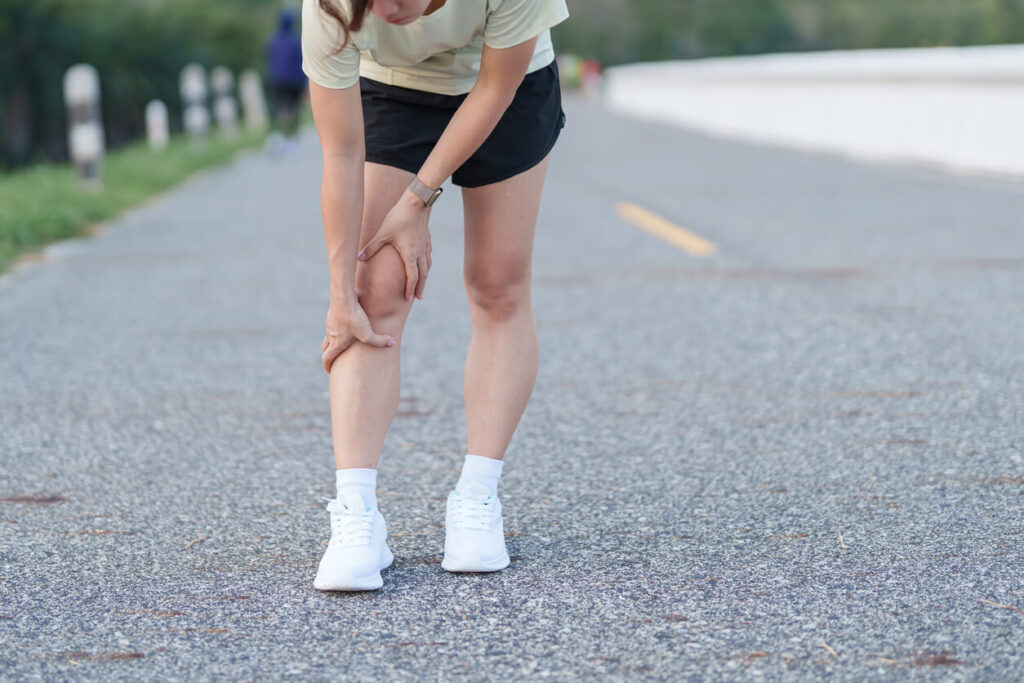
Understanding whether an ACL tear is partial or complete is the first step toward recovery.
In short,
- Orthopedic specialists use physical exams and MRI scans to diagnose the exact severity of the injury.
- Partial tears involve stretched or frayed fibers, while complete tears mean the ligament is fully severed.
- An accurate diagnosis helps your care team determine if you need physical therapy or surgery.
Introduction to ACL Tears
An anterior cruciate ligament (ACL) tear is a common and impactful knee injury, particularly for athletes. The ACL is a crucial band of tissue running through the middle of the knee that provides essential rotational stability. Understanding the difference between partial and complete tears helps patients and providers determine the best recovery path.
Anatomy of the Anterior Cruciate Ligament
The ACL connects the femur to the tibia inside the joint, preventing the shinbone from sliding too far forward. It also provides stability during sudden stops, jumps, and directional changes. Without a functioning ACL, the knee can easily buckle during dynamic movements.
Defining Partial Versus Complete Tears
The severity of an ACL injury tear depends on how much of the ligament is damaged. Doctors grade these injuries on a scale from mild stretches to complete tears to help guide your recovery.
- In a partial tear, only some ligament fibers are damaged, which allows the knee to keep some stability.
- In a complete tear, the ligament is fully torn or severed, making the knee highly unstable and unable to bear weight.
Both types of tears usually trigger immediate, sharp pain, rapid swelling, and a temporary loss of joint movement. You might also hear or feel a distinct “pop” inside the knee at the exact moment the injury occurs.
A precise diagnosis from a healthcare professional is essential to determine the exact state of the ligament. This evaluation helps identify whether the remaining fibers can support your knee through physical therapy or if surgical intervention is necessary.
Causes and Risk Factors
Most ACL tears happen during sudden movements or sports activities. Common causes and risk factors include:
- Pivoting or changing directions quickly while your foot is planted
- Slowing down suddenly or landing awkwardly from a jump
- Receiving a direct blow to the side of the knee
- Playing high-risk sports like soccer, basketball, skiing, and gymnastics
- Individual factors like joint looseness, poor conditioning, or playing on artificial turf
Signs and Symptoms
Common signs and symptoms of an ACL injury include:
- Hearing or feeling a distinct “pop” deep inside the knee
- Rapid swelling within a few hours of the injury
- An inability to bear weight on your leg
- A feeling of the knee “giving out” over time
- Limited range of motion and persistent joint tenderness
Clinical Diagnosis and Grading
Orthopedic specialists use grading systems, physical exams, and imaging to evaluate injuries.
Understanding Ligament Tear Grades
Doctors use a three-tier system:
- Grade 1 involves mild stretching with joint stability.
- Grade 2 describes a partially torn ACL.
- Grade 3 represents a completely severed ligament that cannot support the joint.
According to Johns Hopkins Medicine, a complete tear often requires surgical intervention for high-impact sports.
Key Physical Exams and Imaging
Doctors use several exams and imaging tests to diagnose an ACL injury tear:
- Physical exams, such as the Lachman, pivot shift, and anterior drawer tests, assess joint stability.
- MRI scans confirm partial or complete tears and identify other issues like meniscus tears or bone bruises.
- X-rays rule out bone fractures.
Treatment and Management Options
Your care plan will depend on several personal factors. Your doctor will consider the severity of the tear, your age, your daily activity level, and your long-term physical goals.
Non-Surgical Approaches
Non-surgical management is often a highly effective option for partial tears. This path is ideal for individuals who do not experience frequent knee instability during daily activities.
- Targeted physical therapy focuses on strengthening the quadriceps, hamstrings, and hip stabilizers to support the joint.
- Functional bracing provides external structural support to prevent the knee from giving way during movement.
- Activity modification helps you avoid high-impact pivoting sports while your knee heals and stabilizes.
Surgical Reconstruction
For complete tears or highly active individuals, surgical reconstruction is often the recommended path. According to the Mayo Clinic, this procedure replaces the torn ligament with a tissue graft to fully restore joint stability.
The graft can come from your own body, such as your patellar tendon or hamstring, or from a donor. This minimally invasive surgery is typically performed arthroscopically through small incisions.
Post-operative rehabilitation is a crucial part of the recovery process. This structured physical therapy program typically spans several months to help you safely regain your full strength, flexibility, and range of motion.
Prevention and Lifestyle Considerations
You can lower your risk of a ligament tear with targeted prevention strategies:
- Neuromuscular training to improve your balance, core strength, and landing techniques.
- Choosing the right footwear for your specific sport or activity.
- Staying conditioned during the off-season to keep your joints protected.
Frequently Asked Questions (FAQ)
An anterior cruciate ligament (ACL) injury can feel overwhelming, but understanding your diagnosis is the first step toward getting back on your feet.
Below are answers to common questions about partial versus complete ACL tears, how they are diagnosed, and what to expect during treatment.
What is the main difference between a partial and a complete ACL injury tear?
A partial ACL tear (Grade 2) means only some of the ligament’s fibers are stretched or frayed, allowing the knee to retain a degree of stability. A complete ACL tear (Grade 3) means the ligament is fully severed, resulting in significant joint instability and an inability to safely bear weight.
Can an MRI distinguish between a partial and a complete ACL injury tear?
Yes. While physical stability tests like the Lachman or pivot shift exams give your surgeon immediate feedback about joint looseness, an MRI scan provides detailed images that confirm whether the ligament fibers are partially damaged or completely torn.
Does a partial ACL tear always require surgery?
No. Non-surgical management is often a highly effective path for partial tears, especially if your knee remains stable during daily activities. Treatment typically focuses on targeted physical therapy to strengthen surrounding muscles, activity modification, and functional bracing.
Why is surgery usually recommended for a complete ACL injury tear?
Because a completely severed ACL cannot heal back together on its own, it leaves the knee highly unstable and prone to “giving out”. Surgical reconstruction replaces the torn ligament with a tissue graft to fully restore rotational stability, which is essential for dynamic movements and high-impact sports.
What does the recovery process look like after ACL surgery?
Recovery requires a structured, multi-month post-operative rehabilitation program. Physical therapy helps you safely rebuild leg strength, regain full range of motion, and practice proper landing and movement techniques before returning to sports or intense physical activity.
Get Treatment for An ACL Injury Tear in Dover, NJ
Knowing whether you have a partial or complete ACL injury tear is the first step toward recovery. Our orthopedic specialists use physical exams and advanced imaging to find the exact severity of your injury.
This clear diagnosis helps us build a personalized treatment plan just for you. Depending on your needs, your care may include targeted physical therapy, bracing, or surgical reconstruction to rebuild your knee’s strength.
If you suspect an ACL injury or feel your knee giving out, getting help early is key. Prompt care gives you the best chance to fully recover and safely return to the activities you love.
Schedule a consultation with Orthopedic Associates of West Jersey today. Call us at (973) 989-0888 or use our online appointment request form to get started.
